
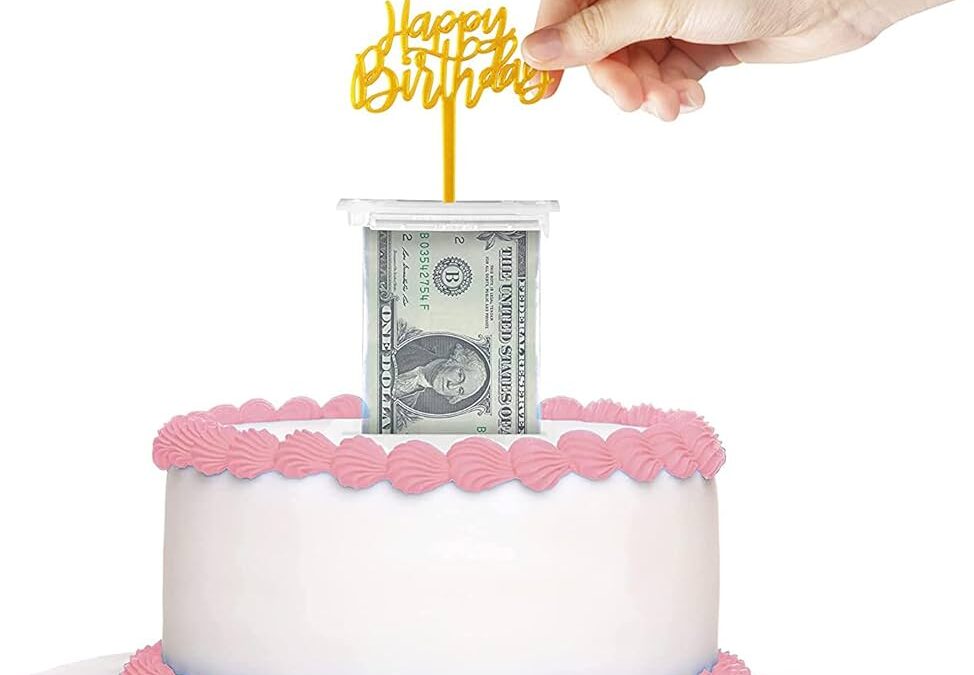

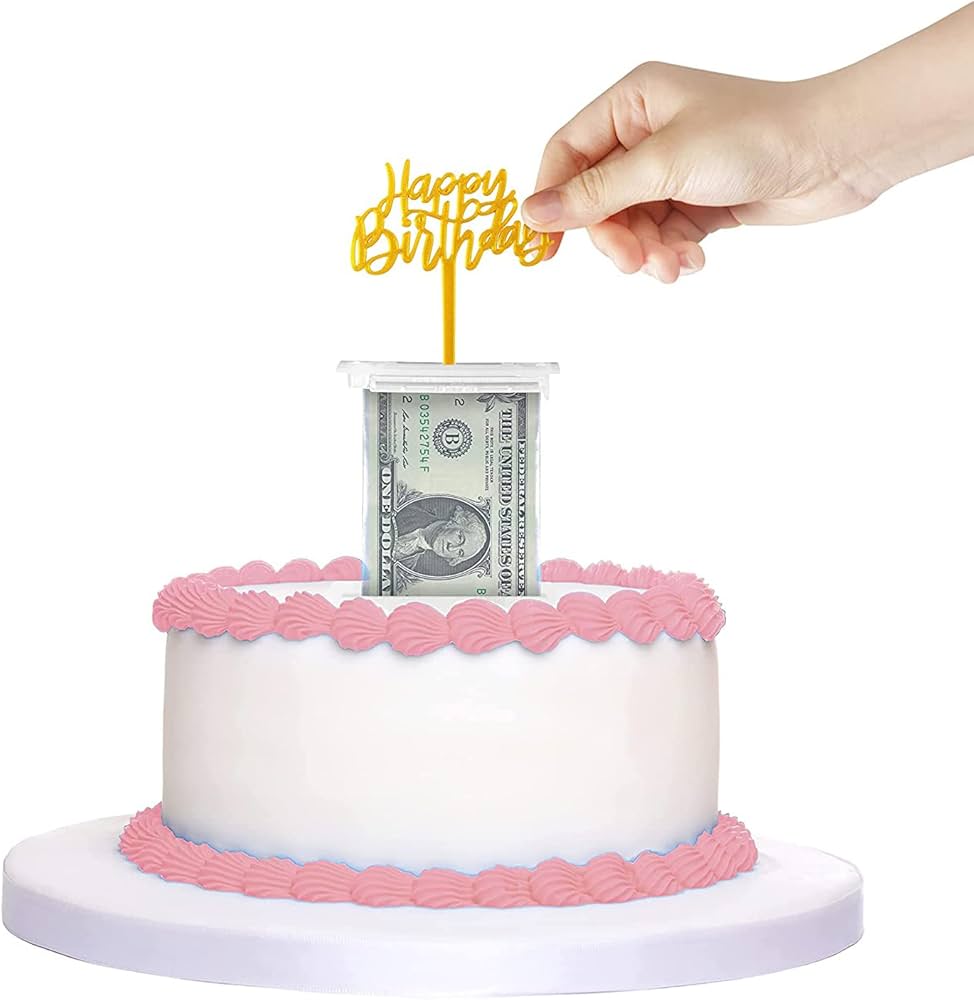
The money pulling cake represents one of those curious innovations that emerges when human ingenuity meets the desire to make everyday celebrations more theatrical. At first glance, it appears to be an ordinary cake, perhaps frosted in festive colours or decorated with flowers. But concealed within its layers lies something unexpected: real currency, carefully rolled and tucked into plastic tubes, waiting to be extracted by party guests in what has become a peculiar ritual of modern celebration culture. The phenomenon raises interesting questions about how traditions evolve and why certain practices, once introduced, spread with remarkable speed across different communities.
The Mechanics of Construction
Understanding how a money pulling cake actually works requires a brief examination of its internal architecture. The cake itself functions as both dessert and container, a dual-purpose design that would have seemed absurd to bakers even a generation ago.
The construction process follows a specific sequence. Bakers insert clear plastic straws or food-grade tubes into the cake layers before assembly. Into these tubes, they thread ribbons attached to rolled banknotes. The notes themselves are typically placed in small plastic sleeves to protect them from contact with the cake. The ribbons extend through the cake’s interior, emerging at strategic points around the exterior where they can be grasped by eager participants.
The result is a cake that contains, quite literally, its own entertainment system. When guests pull the ribbons during the celebration, the notes slide through the tubes and emerge, transforming what might have been a passive dessert display into an interactive experience.
Origins and Cultural Context
The money cake tradition appears to have originated in Asia, though pinpointing an exact genesis proves difficult, as is often the case with viral cultural practices. What we can observe is its rapid adoption across Singapore, Malaysia, and other Southeast Asian nations over the past decade.
According to baker Jennifer Lim, who has been creating these cakes in Singapore since 2015, “The money pulling cake Singapore market exploded quite suddenly. One year we weren’t making them at all, and the next year they represented about 20 per cent of our birthday cake orders. It’s fascinating how quickly certain ideas catch on.”
The practice reflects broader cultural attitudes about money and celebration. In many Asian cultures, giving monetary gifts at celebrations carries less stigma than it might in Western contexts. The cash pulling cake simply makes this gift-giving more participatory and amusing.
Why the Design Appeals to Celebrants
The popularity of these cakes can be attributed to several factors that, when examined, reveal something about contemporary celebration culture:
Interactive entertainment
Modern celebrations increasingly prioritise experiences over passive reception, and pulling money from a cake certainly qualifies as experiential
Practical gift-giving
Recipients receive cash they can actually use rather than potentially unwanted items, solving the perennial problem of what to give someone who seems to have everything
Social media appeal
The visual spectacle of money emerging from cake creates content worth photographing and sharing online
Generational flexibility
The concept works for children’s birthdays, adult milestone celebrations, and everything in between
Customisable value
Hosts can control costs by determining how much money to include, from modest notes for children to more substantial amounts for significant occasions
The Economics of Implementation
Creating a money pulling cake design involves both the cake cost and the currency value inserted within. This dual pricing structure makes the total investment variable and somewhat unusual in the dessert world.
The cake itself might cost a moderate amount, similar to other custom celebration cakes. But the money component adds another layer of expense that the host controls entirely. For a child’s birthday, parents might insert notes worth five or ten dollars each. For a wedding or major milestone, the amounts could be considerably higher.
Pastry chef David Wong notes that “clients sometimes struggle with the mathematics of money cakes in Singapore. They need to calculate how many ribbons they want based on expected guest count, then multiply that by their chosen note value. It requires more advance planning than ordering a traditional cake.”
Structural and Hygiene Considerations
The engineering challenges are not trivial. The cake must maintain structural integrity despite being perforated with tubes. The tubes themselves must be positioned carefully to avoid interfering with each other or weakening the cake’s architecture. Bakers have developed various techniques to address these challenges, from using smaller tubes that create minimal disruption to reinforcing certain cake areas with additional support.
Hygiene represents another consideration. The money never actually touches the cake if properly constructed, remaining sealed in plastic throughout. The tubes are food-safe. Yet some people remain squeamish about the concept of currency, which passes through countless hands, being stored inside something edible.
The Broader Trend of Interactive Desserts
The money-filled celebration cake fits within a larger category of interactive desserts that have gained prominence in recent years. Gender reveal cakes that spill coloured filling when cut, pinata cakes that release sweets when broken open, and geode cakes that display crystalline interiors all share this emphasis on surprise and revelation.
These designs suggest that contemporary celebration culture values the moment of discovery almost as much as the dessert itself. The cake becomes a performance prop, a vehicle for creating memorable experiences rather than simply a sweet conclusion to a meal.
Looking Forward
Whether the money pulling cake will endure as a celebration staple or fade as trends inevitably do remains to be seen. For now, it occupies a curious niche in the landscape of celebration culture, representing our ongoing desire to make ordinary moments more extraordinary, one pulled ribbon at a time.
