
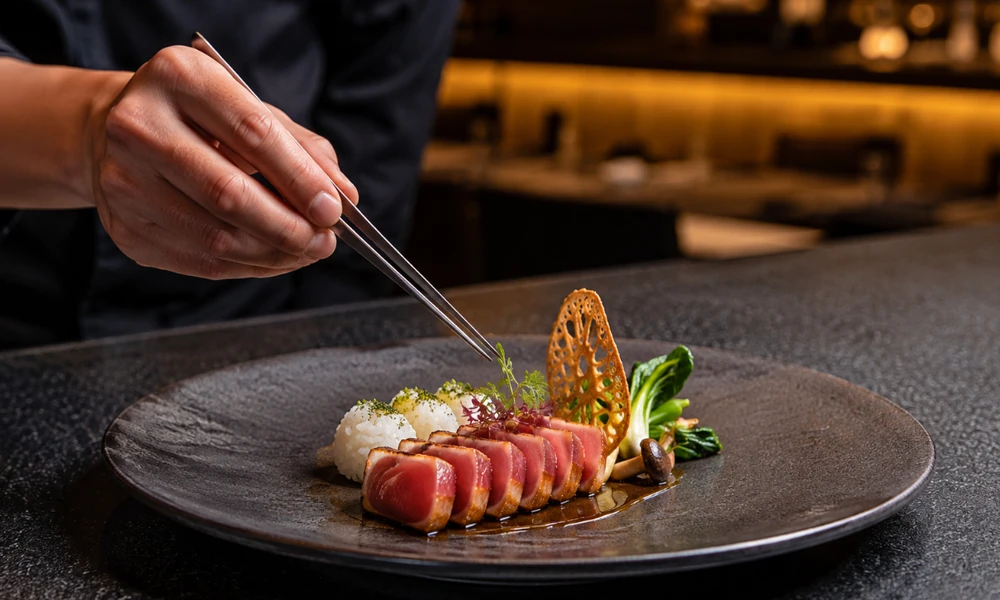

A dish reaches the eyes before it reaches the tongue. Its colors, shapes, arrangement, and serving dish create an early idea of how the food might taste.
In modern Asian cuisine, presentation is more than decoration. It helps communicate the ingredients, season, cooking style, and mood of the meal. When handled thoughtfully, plating turns food into a visual experience while keeping flavor at the center.
Why Does Food Presentation Matter?
Presentation shapes expectations. A bright plate filled with fresh herbs and crisp vegetables suggests freshness. A dark ceramic bowl holding a warm broth creates a feeling of comfort.
The arrangement also guides the diner. It shows which ingredients belong together and which sauce or garnish should be tasted first.
Well-presented food often looks carefully prepared. Clean cuts, organized portions, and balanced colors reflect attention to detail in the kitchen. This visual care builds excitement before the first bite.
How Do Traditional Ideas Influence Modern Plating?
Asian food presentation has deep roots in regional dining traditions. Japanese plating often highlights seasonality, natural shapes, and open space. Chinese banquet dishes might focus on abundance, balance, and symbolic colors. Korean meals use several small side dishes to create variety across the table.
Southeast Asian cuisines often bring together colorful herbs, vegetables, sauces, and garnishes. Indian presentation uses rich curries, breads, rice, and small dishes to form a complete meal.
Modern chefs study these traditions and adapt them. They might simplify a familiar dish, change its serving vessel, or arrange its parts separately. The goal is often to create something fresh while keeping the dish recognizable.
Color Creates the First Impression
Color is one of the strongest parts of food presentation. Asian ingredients provide many natural choices, including green herbs, red chilies, golden sauces, purple vegetables, white rice, and dark seaweed.
A plate with too many similar colors might appear flat. A small amount of contrast makes the main ingredient easier to notice.
Color should come from ingredients that belong in the dish. A garnish added only for appearance might confuse the flavor. Good presentation uses color to support the food rather than distract from it.
Why Are Shape and Placement Important?
Chefs use shape to create order and movement. Thin slices of fish might form a clean row. Dumplings might follow the curve of a plate. Rice might provide a stable base for meat and vegetables.
Not every part needs to sit in the center. An off-center arrangement often looks more natural and gives each element room to stand out.
Open space also matters. Leaving part of the plate empty directs attention toward the food. It makes a small number of ingredients feel intentional instead of incomplete.
Tableware Becomes Part of the Dish
The bowl, plate, tray, or stone holding the food affects how the meal looks and feels. Handmade ceramics add texture. Dark plates highlight pale rice and bright vegetables. Simple white dishes allow colorful ingredients to lead.
The shape of the tableware also influences how the food is eaten. A deep bowl keeps noodles and broth together, while a long plate supports sliced ingredients or several small bites.
Modern Asian restaurants often mix traditional materials with simple contemporary designs. Wood, ceramic, stone, glass, and metal create different moods without changing the food itself.
Texture Should Be Visible
A strong presentation suggests how the dish will feel when eaten. A crisp garnish should look light and dry. A sauce should appear smooth and glossy. Seared fish or meat should show its browned surface.
Showing texture helps build appetite. It also highlights the work behind the dish, such as careful frying, grilling, slicing, or steaming.
Different heights add another visual layer. Still, stacking food too high might make it awkward to eat. Presentation should remain practical.
Has Social Media Changed Modern Plating?
Photos now influence how diners discover food. This has encouraged brighter colors, cleaner arrangements, and dramatic serving styles.
Yet a dish designed only for a photograph might disappoint at the table. Garnishes might get in the way, food might cool while being arranged, or unusual serving pieces might make eating difficult.
The strongest modern presentation works both on camera and in person. It looks beautiful, arrives at the correct temperature, and remains easy to enjoy.
When presentation, flavor, and function support one another, food begins to feel like art. The plate tells a story, but the taste still delivers its most important message.
This post was written by a professional at Fortu. Fortu stands out among the top Restaurants St Petersburg FL, offering an elevated Pan-Asian dining experience in the heart of St. Petersburg, Florida. Celebrating Asia’s vibrant and diverse culture, Fortu introduces bright and bold flavors to a bright and bold city with a menu of locally and sustainably sourced options, from small bites to hearty delicacies. Whether winding down from a beach day or celebrating a special occasion, guests can enjoy a lush, alluring atmosphere and an authentic taste of Asia’s divine cuisine at one of the finest Restaurants On Central Ave St Pete.
The Role of Presentation in Modern Asian Cuisine: When Food Becomes Art
